2023-02-17 Markets
We live in strange times. Among other things, an international media organization can get away with knowingly disseminating false news without apparently losing viewers.

We live in strange times. Among other things, an international media organization can get away with knowingly disseminating false news without apparently losing viewers.
Things looked more or less stable until they no longer did: Friday’s employment report in the US took many by surprise and forced market participants to revise overly optimistic interest rate paths.
Equities had another good week while interest rates were all marginally up. There was not much to report in terms of news or other market related issues.

A mixed week, with markets focusing on monetary policy developments (particularly in Japan) and on the results of the earnings season. I’m always amazed at the amount of attention bestowed upon a single quarterly statistic.
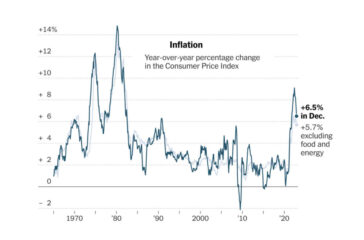
A lot is being said about inflation, and in particular about two questions: is the current inflationary bout temporary or permanent, and have central bankers (especially the Fed) made a policy error.

Morgan Stanley Research tells us that 2022 was the first year since at least 1870 in which both US stocks and long-term bonds fell by more than 10%.

Like parenting, regulation should be strict, evenly enforced and calibrated so that it does not kill individual creativity and growth. Too often regulatory focus falls exclusively on strictness, leaving enforcement and economic considerations behind.

Until a little over 50 years ago investors with no financial training were obliged to hire a professional portfolio manager, either directly or through some commingled vehicle. This was because they needed someone who could, at least in principle, suggest the right asset allocation, select securities and diversify their portfolios.

Benchmark agnosticism, the practice of declaring yourself a manager without benchmark, is a trendy subject. Acknowledging that you pay no attention to standard and replicable indices in the market apparently makes you a more desirable (if not better) manager.

The way data are presented should help understanding, not engender serious doubts.
At my request I was recently provided by an advisor with an analysis of two investment alternatives: a fund investing in private markets (that is, in non-public market opportunities, with limited liquidity) which the advisor was proposing to a client and an alternative in the form of a listed ETF.